

ENERGY MODELING
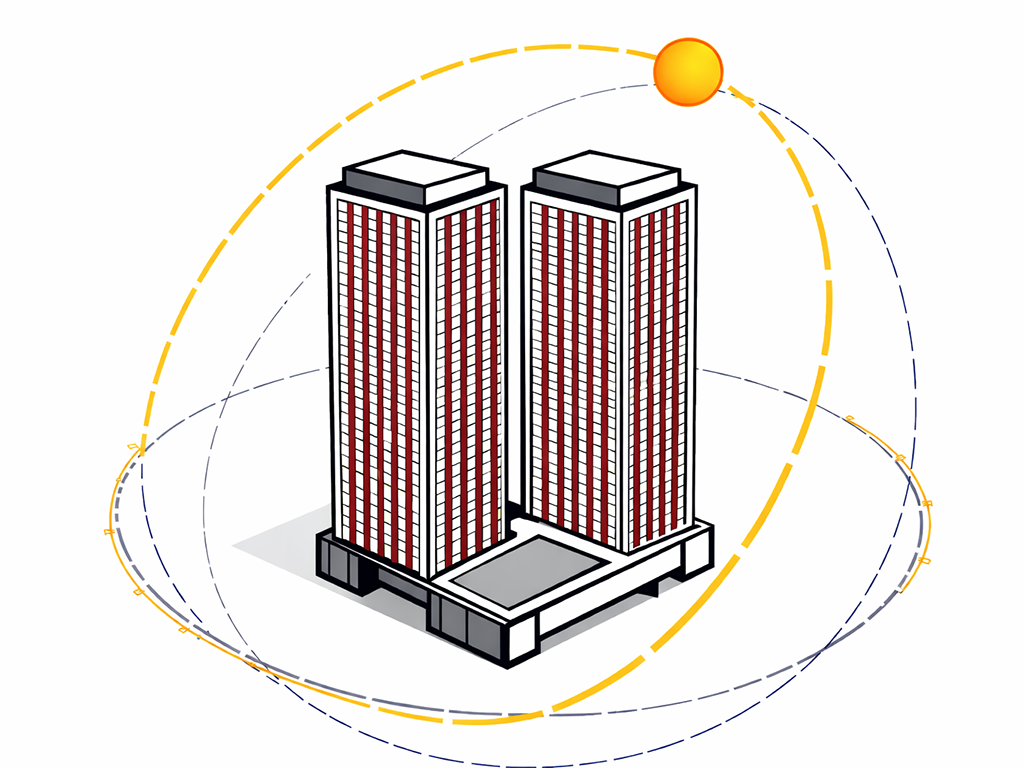
If you are responsible for managing construction costs, setting performance targets, navigating code requirements, evaluating incentive and rebate programs, or pursuing Canadian Mortgage and Housing Corporation (CMHC) programs, energy modeling helps you understand the cost, potential savings, and performance impact of design decisions before they become expensive or difficult to change.
By simulating how your building is expected to perform under different design assumptions over the course of a full year, energy modeling brings financial and technical clarity to decisions that are often made too early, or revisited too late.
It helps owners pursuing highly energy-efficient buildings balance performance with affordability, and provides a practical tool for evaluating improvements to existing buildings where upgrades may be phased over time.
WHAT IS ENERGY MODELING?
Energy modeling is a physics-based simulation of how your building is expected to behave over the course of a full year.
A digital version of the building is created using its geometry, envelope, systems, usage patterns, and local climate data. That model is then run hour by hour to evaluate how design decisions influence energy performance under simulated operating conditions.
Rather than relying on rules of thumb or static calculations, energy modeling allows you to test scenarios, compare options, and see which decisions meaningfully affect performance, cost, and compliance before they are locked into the design.
WHEN ENERGY MODELING ADDS THE MOST VALUE
Energy modeling adds the most value when you need clarity before committing to decisions that affect cost, compliance, and long-term performance. This is often the case during early project briefs and feasibility studies, when key design assumptions are still flexible and decisions have the greatest long-term impact.
It is particularly useful when navigating performance-based compliance under the Ontario’s Building Code’s SB-10 framework, evaluating participation in incentive and rebate programs, including CMHC financing programs and utility-led incentives, or responding to performance targets that have shifted over time. In these situations, energy modeling helps you move from open-ended discussion to informed commitment, reducing uncertainty and the risk of late-stage redesign.
This clarity is especially valuable for owners, developers, architects, and public-sector teams responsible for setting performance targets and making early decisions that influence cost, compliance, and long-term outcomes
WE HELP YOU PLAN FOR REAL SAVINGS
Across hundreds of projects, we’ve guided real decisions around savings, compliance, and funding.
ENERGY REDUCTION
Our modeling compares your reference building to a proposed design using annual energy consumption in kilowatt-hours.
In the last three years, our energy models have represented an energy savings of over 9,400,000 kilowatt-hours.
That’s the equivalent of over 1600 homes’ annual electricity use.
GREENHOUSE GAS
We evaluate how design decisions impact greenhouse gas emissions by measuring modeled performance against a reference building.
In the last three years, our energy models have represented a GHG reduction of over 1,500,000 kilograms of CO2.
That’s the equivalent of burning over 630,000 litres of gasoline.
We understand that navigating CMHC (Programs like MLI Select, and others.) can feel complex, particularly when
energy performance requirements intersect with financing timelines and stakeholder expectations.
SUPPORTING REBATES, INCENTIVES, AND COMPLIANCE
We regularly help clients interpret how energy criteria apply across a range of incentive, rebate, and financing programs, and how energy modeling supports those evaluations. This includes programs such as CMHC financing initiatives, the Green Municipal Fund, funding from utilities providers, and more.
In Ontario, we also see frequent uncertainty around performance-based compliance under SB-10. Different pathways, code years, and submission requirements can apply depending on how a project is structured. We use energy modeling to help clarify which approach you are pursuing and what documentation is required, reducing confusion and duplication during the application and approval process.

What is SB-10 Performance-Based Compliance?
SB-10 performance-based compliance allows your project to meet Ontario Building Code energy requirements by demonstrating better overall building performance, rather than following a rigid set of prescriptive rules. This approach gives you more flexibility in how systems are designed, while providing clear, documented evidence of compliance to support approvals and funding programs. And our team is here to help you make it happen.
MANAGING CHANGING TARGETS AND DESIGN TRADEOFFS
Energy modeling provides a consistent, defensible basis for evaluating evolving performance targets by grounding design decisions in objective analysis that balances capital cost, performance outcomes, and financing considerations upfront.

-
Performance targets often shift as new information, funding paths, and stakeholder priorities emerge
-
Energy modeling replaces assumptions and opinions with a stable analytical reference point
-
Tradeoffs between cost, performance, and compliance can be evaluated objectively
-
Early analysis supports deliberate decisions before design choices are locked in
-
Technical ambition is aligned with financial reality, reducing late-stage risk and complexity
LONG-TERM OPERATIONAL COSTS
We see the long-term impact of early design decisions most clearly once buildings are in operation. While capital costs are incurred once, operating costs repeat every year, quietly accumulating over the full period of ownership.
We use energy modeling to help you look beyond first costs and understand how design decisions influence operating expenses year after year. By evaluating performance over the life of the building or its systems, we help identify where costs are likely to persist, which systems tend to drive the greatest long-term impact, and how seemingly modest differences can compound over decades.
While outcomes vary by project, this process supports clearer conversations about long-term value. We help you weigh upfront investment against operating costs, recognize where efficiencies are most likely to pay off over time, and avoid decisions that appear economical initially but prove costly throughout ownership.